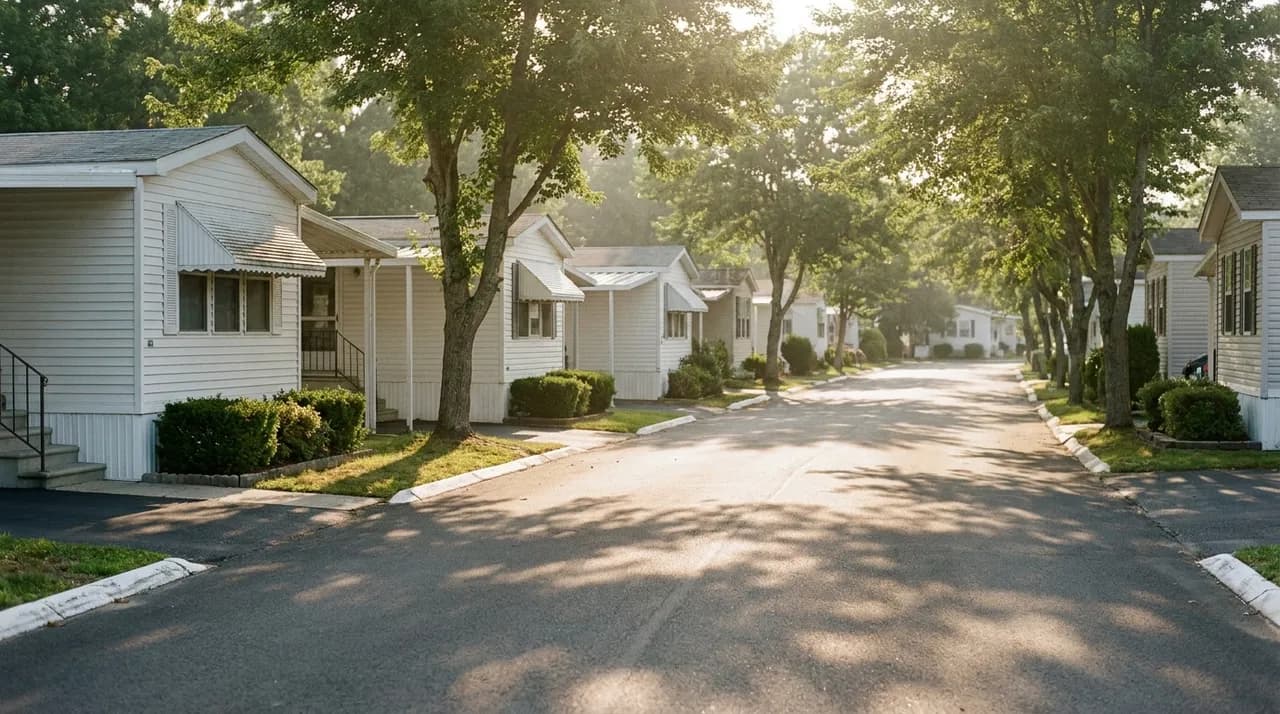
If you own a manufactured home in an age-restricted community in New Jersey, the restriction is not just a lifestyle preference. It is a legal category that travels with the home, and it decides who is allowed to buy it from you.
That is worth understanding before you put a sign out, not after.
Why this matters so much in New Jersey
The Federal Reserve Bank of Philadelphia's 2024 inventory of New Jersey manufactured housing communities found that residents 65 and older make up a disproportionate share of the neighborhoods where these communities sit: about 21 percent of residents in census block groups containing a community, against about 16 percent statewide.
The report attributes that skew directly to "the large segment of the state's MHCs that are age-restricted communities," and cites a 2012 survey by the Manufactured Home Owners Association of New Jersey finding that more than two in five residents of manufactured homes in the state were over 65.
Ocean County is the clearest example. It holds 38 communities, tied for the most of any New Jersey county, and the one very large community the Fed report names by name, Pine Ridge at Crestwood with over 1,000 units, is age-restricted and sits in Ocean County. At the 2020 census roughly 23 percent of Ocean County residents were 65 or older.
Burlington County is the interesting counterexample. It holds 21 communities, sixth most in the state, but its county-level age profile is unremarkable: roughly 18 percent of residents 65 or older and a median age near 41, almost identical to Ocean's median age.
That contrast is the lesson. Age restriction is a community-level decision, not a county-level fact. You cannot infer it from where the home sits. You have to check the specific community.
What "55+" actually requires
The exemption that lets a community lawfully restrict by age comes from the federal Fair Housing Act as amended by the Housing for Older Persons Act, and it is spelled out at 24 CFR 100.305.
To operate as housing for older persons in the 55 and over category, a community must satisfy three things at once:
- At least 80 percent of the occupied units are occupied by at least one person 55 years of age or older.
- The community publishes and adheres to policies and procedures that demonstrate its intent to be housing for older persons.
- The community complies with HUD's rules for verification of occupancy, which in practice means documenting residents' ages on reliable records and updating that survey periodically.
New Jersey's Law Against Discrimination carries a parallel housing-for-older-persons definition at N.J.S.A. 10:5-5, with the same 80 percent threshold and the same requirement that the community publish and adhere to policies demonstrating an intent to provide housing for persons 55 and over.
One thing neither law does: nobody certifies this. HUD does not issue a certificate confirming that a given community qualifies as housing for older persons, and neither does the State of New Jersey. A community's status rests on whether it actually meets the requirements, which is why its own written policy is the document that matters.
Why two communities with the same sign behave differently
The 80 percent figure is a floor, not a description. It leaves a community up to 20 percent of its occupied units that need no resident aged 55 or over, and communities manage that headroom very differently.
Some run a strict internal policy: every household must include a resident 55 or older, no exceptions, which keeps them comfortably clear of the threshold. Some allow a defined number of under-55 households and track the count closely. Some set a secondary minimum age for other occupants, commonly somewhere in the 40s or above, which is a policy choice rather than a statutory requirement.
All of that is legitimate, and all of it changes who can buy your home. Two neighboring communities in the same township can have genuinely different rules.
What this does to your buyer pool
Two effects, pulling in opposite directions.
It narrows the pool. Your buyer has to satisfy both the community's age policy and its ordinary tenancy screening. A qualified, funded, motivated buyer who is 49 is not a buyer for your home if the community requires a 55-year-old occupant. That is a real constraint and it generally means a longer search.
It concentrates the demand that remains. Buyers specifically looking for an age-restricted community have a limited menu, and in a state where the Philadelphia Fed found only about 3 percent of communities carry high lot vacancy, that menu is often close to full. A well-kept home in a well-run age-restricted community is not competing with the entire housing market. It is competing with a handful of similar homes.
Whether the net is good or bad for you depends almost entirely on the condition of the home and the reputation of the community.
The inheritance problem, which nobody warns families about
This is the situation we see most often and it catches families completely off guard.
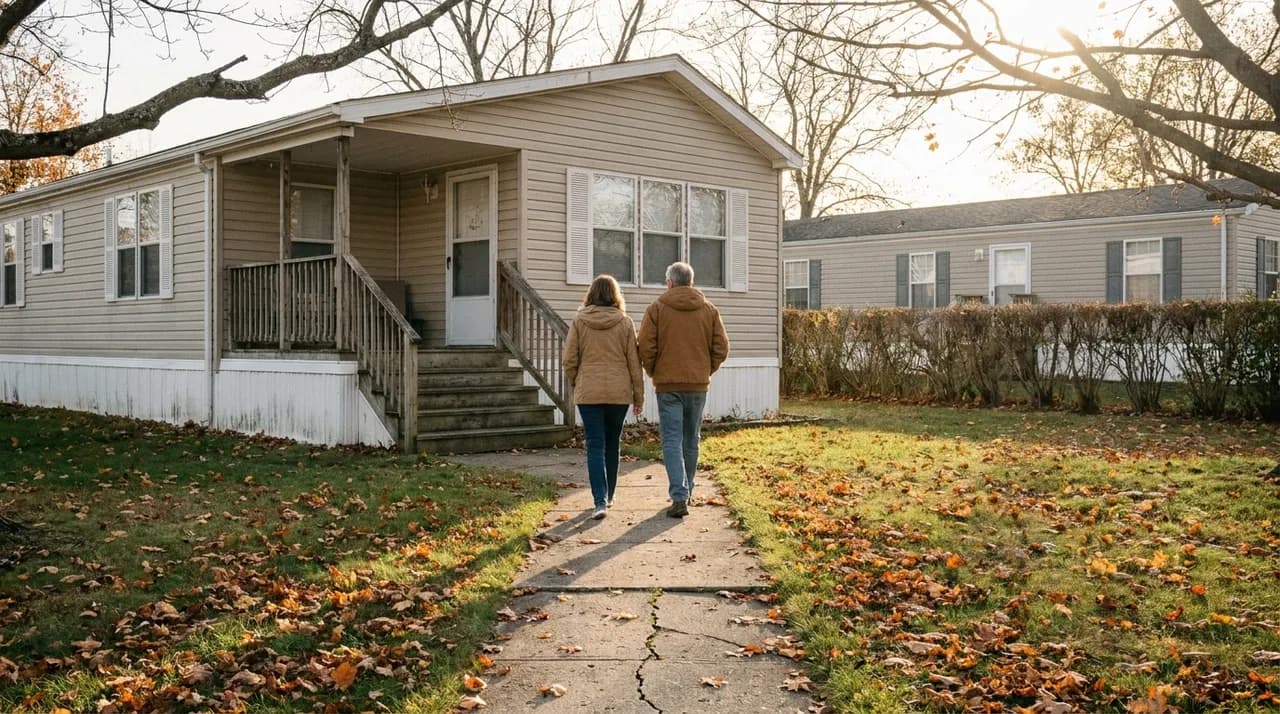
A parent owns a home in an age-restricted community and passes away. The adult child inherits the home. The child is 46. The community's policy requires a resident 55 or over.
The child now owns a home they are not permitted to live in, while lot rent continues to accrue against a site they are not occupying. The realistic options are to sell it to someone who does qualify, or to sell it to a buyer who will move the home out, and both take time under a clock that is running.
If you own a home in an age-restricted community, tell your family this now. Put the community's written policy somewhere they will find it. It is the cheapest thing you can do to save them a bad month.
A related version: an under-55 surviving spouse or partner. Many communities have a written provision covering this, and many do not. Ask, and get the answer in writing, before you need it.
Financing is the other constraint
Homes sited on leased land are usually financed with chattel loans rather than mortgages, because the home is personal property and the land is not the buyer's. The Philadelphia Fed's analysis of 2019 to 2022 lending data found that New Jersey borrowers who were likely buying inside a community paid significantly higher interest rates than borrowers with manufactured home mortgages, and noted that Fannie Mae and Freddie Mac do not purchase chattel loans, which leaves a weak secondary market.
The practical effect on your sale is that a meaningful share of buyers in these communities are cash buyers, often using proceeds from selling a site-built house. That is one reason age-restricted communities can transact well despite the narrower pool.
What to ask, in writing, before you list
Five questions to the community office. Ask by email so you have the answer in writing.
- Does this community operate as housing for older persons, and may I have a copy of the written age policy?
- What is the minimum age for the qualifying occupant, and is there a minimum age for any other occupant?
- How many under-55 households does the community currently permit, and is that allowance open?
- What does the tenancy application screen for, what does it cost, and how long does a decision take?
- What will the lot rent be for an incoming household, as opposed to what I pay now?
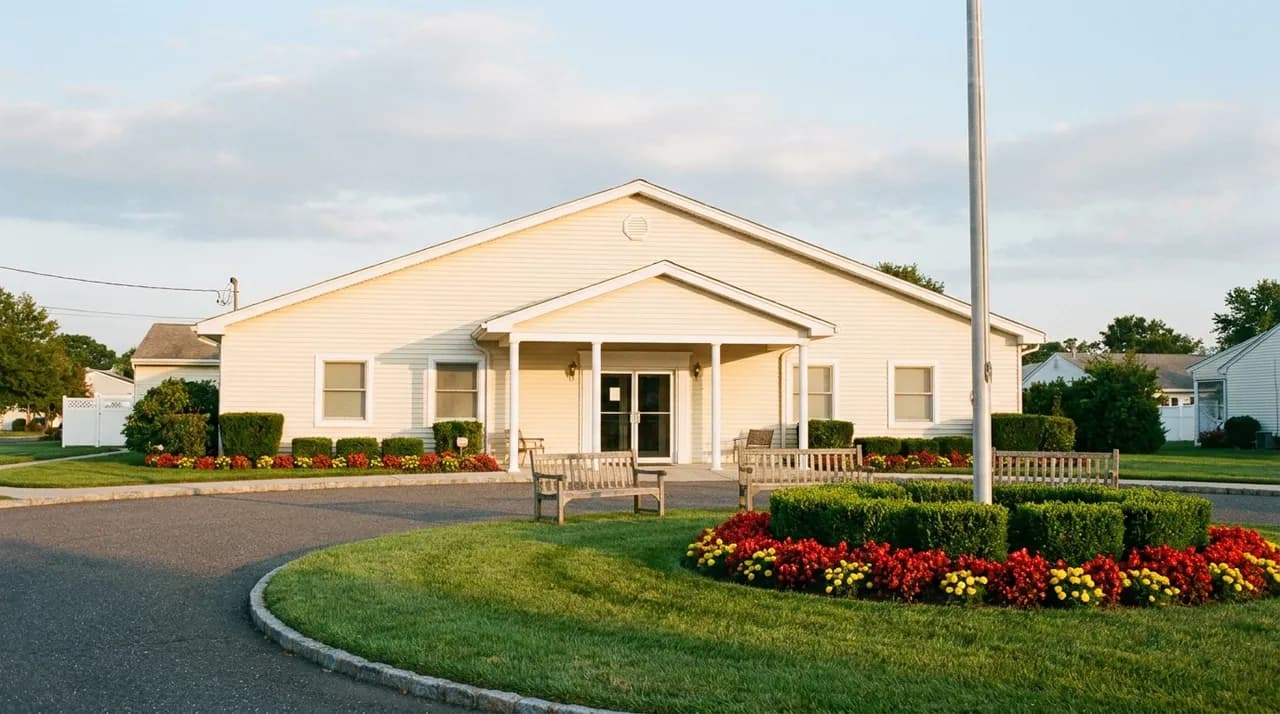
That last one surprises people. Under New Jersey's manufactured home rent cap law, a community may set the initial rate for a new tenancy where no tenant from the prior tenancy remains in lawful possession. Your buyer's lot rent may not be your lot rent, and they deserve the real number. Getting that answer out of the community office early is part of how we work.
Where we fit
We work across Ocean, Burlington and the other nine counties where this housing is concentrated, on both sides of the transaction.
If your home shows well and the community is organized, listing it will usually beat any offer, because the buyer who needs an age-restricted community and likes your home has nowhere else convenient to go. If the timeline is the problem, or if the home needs work that a retail buyer will not look past, a cash offer may be the cleaner outcome. And if you are the buyer trying to get into one of these communities, we help with that too.
We will tell you which one applies. Sometimes the honest answer is that you should not sell to us.
This article is general information about federal and New Jersey fair housing law and is not legal advice. Age-restriction rules are set and administered by each community, neither HUD nor the State of New Jersey certifies compliance, and the statutes and regulations cited contain provisions not summarized here. Consult a New Jersey attorney about your situation.
Sources: 24 CFR Part 100 Subpart E, Housing for Older Persons; New Jersey Law Against Discrimination, N.J.S.A. 10:5; Federal Reserve Bank of Philadelphia, Manufactured Housing Communities in New Jersey: The Basics (June 2024); U.S. Census Bureau QuickFacts, Ocean County, New Jersey; U.S. Census Bureau QuickFacts, Burlington County, New Jersey