On paper, Ocean and Monmouth counties look like the same market. They are adjacent. They share the same coastline. At the 2020 census they had populations within about one percent of each other, both in the low 640,000s. If you were pricing manufactured homes from a spreadsheet, you would treat them identically.
They do not behave identically, and the gap is wide enough to change how you should sell.
The count: 38 against 31
The Federal Reserve Bank of Philadelphia's 2024 inventory of New Jersey manufactured housing communities counts 38 communities in Ocean County and 31 in Monmouth.
Ocean ties Atlantic County for the most in the state. Monmouth ranks third. Between them, these two counties hold 69 of New Jersey's 268 communities, roughly a quarter of the statewide total, on two adjacent counties out of twenty-one.
So both are real markets. But a seven-community gap on effectively identical population means Ocean carries meaningfully more of this housing type per resident, and that shows up in buyer behavior.
The age mix is the real difference, and it is not what you would guess
Here is the statistic that tells you the most about these two counties.
At the 2020 census, Ocean County had the lower median age of the two (about 41.5 years against Monmouth's 43.5), but the higher share of residents 65 and older (about 23 percent against about 19 percent).
Those two facts only fit together one way. Ocean County's population is pulled hard from both ends: a large retirement-age population and a large young-family population, with a thinner middle. Monmouth is more evenly distributed across the middle of the age range.
That bimodal shape is the defining feature of the Ocean County manufactured housing market. The county contains both large age-restricted communities and communities with no age restriction at all, and they draw from completely different buyer pools. The Philadelphia Fed report's one named example of a very large New Jersey community, Pine Ridge at Crestwood with over 1,000 units, is an age-restricted community in Ocean County.
Monmouth's communities skew toward a general-market buyer. Ocean's split, and which side of that split your community sits on matters more to your sale than the county does.
One caution. Age restriction is set community by community, not county by county, and neither HUD nor the State of New Jersey certifies which communities qualify. Do not assume. Ask your community's office in writing whether it operates as housing for older persons and what its stated policy is. Working that out before a home goes on the market is part of how we work.
Ocean has rural inventory. Monmouth essentially does not.
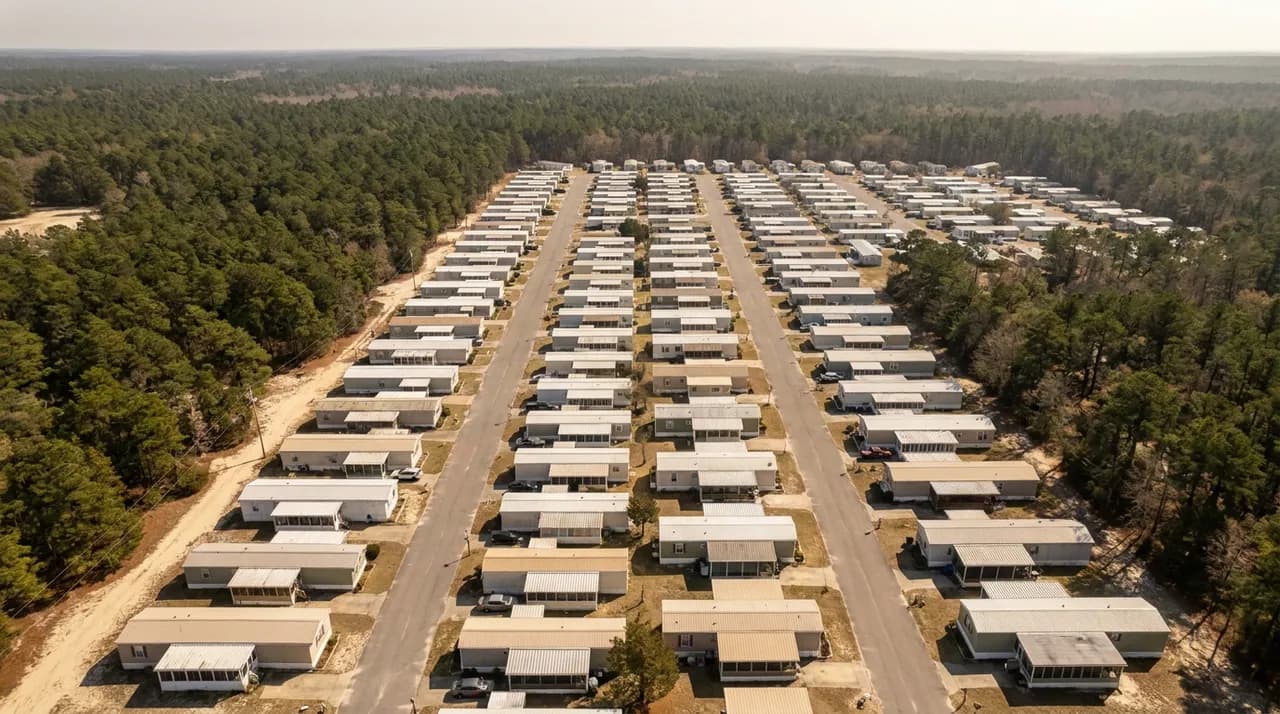
Nearly four in five New Jersey manufactured housing communities sit inside census-designated urban areas. The Fed report identifies the counties holding the largest numbers of rural communities as Warren, Ocean, Burlington and Cumberland.
Ocean is on that list. Monmouth is not.
That is a genuine structural difference. Ocean County runs deep inland into the Pinelands, and a meaningful share of its 38 communities sit well away from the beach in low-density surroundings. Monmouth's 31 are, by and large, embedded in developed suburban and shore municipalities.
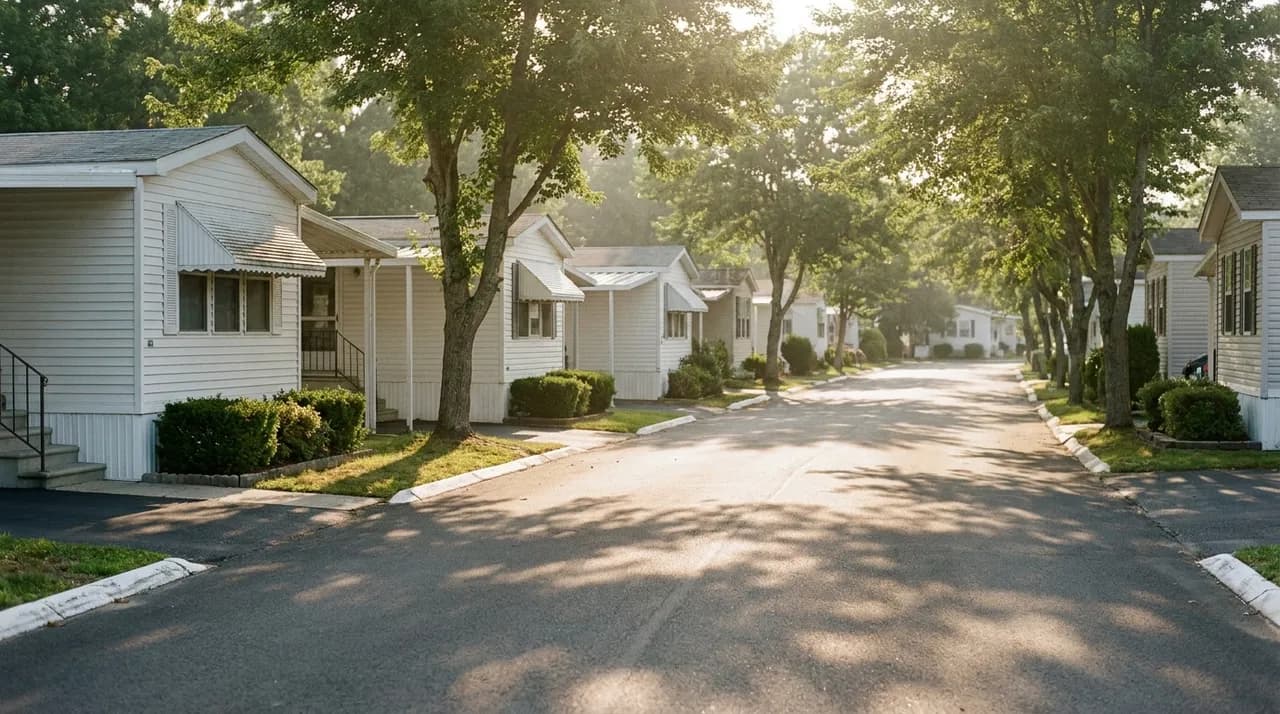
For a seller this changes the shape of the buyer pool. An inland Ocean County community competes on price, space and quiet. A Monmouth County community competes on location inside some of the most expensive residential real estate in New Jersey, where a manufactured home is often the only way a buyer gets into that municipality at all. Those are different pitches, and the same listing copy will not work for both.
Shore exposure is real in both, and it is not a county-level fact
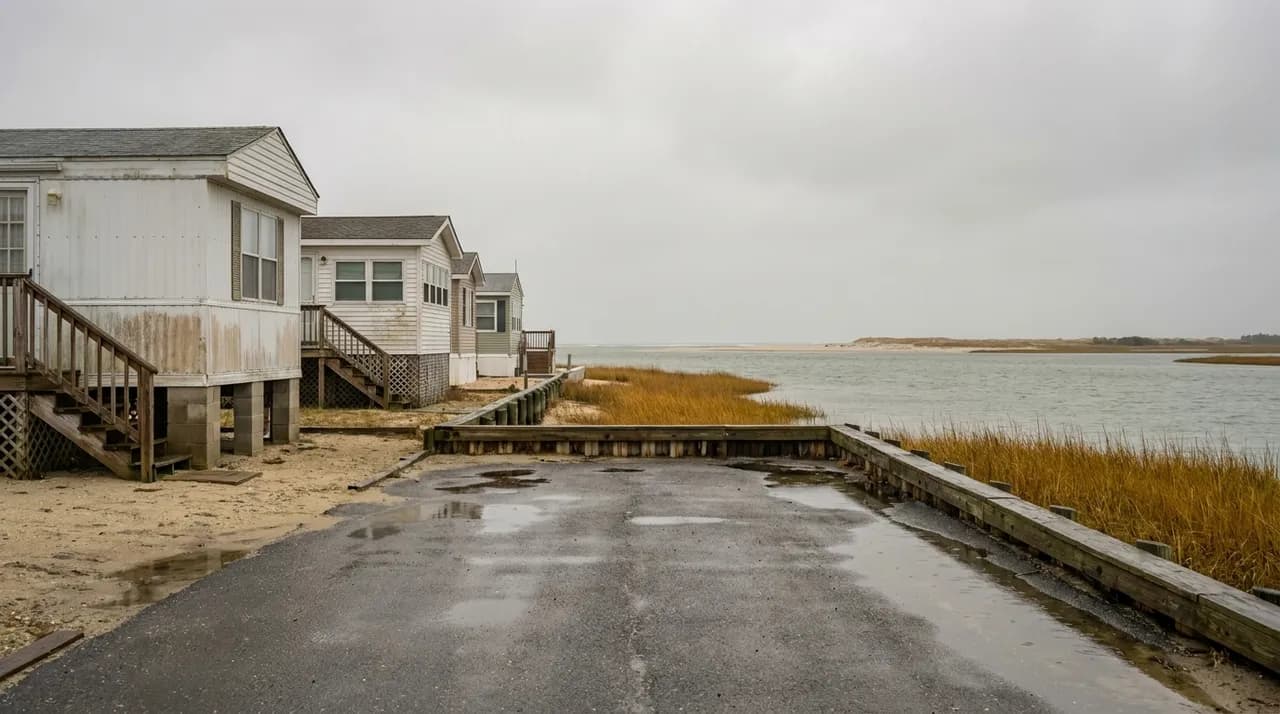
Both counties carry significant flood exposure. Both took direct damage in past coastal storms. But flood risk in New Jersey is a parcel-level fact, not a county-level one, and treating it as a county generalization will cost you.
Two communities four miles apart in the same township can sit in different FEMA flood zones, and a manufactured home's exposure depends on its elevation, its foundation, and how it is anchored. Look up the actual address on the FEMA Flood Map Service Center and on New Jersey DEP's flood risk tool before you form a view.
This matters more than it used to. Since 20 March 2024, New Jersey sellers have been legally required to disclose, in the property condition disclosure statement, whether a property sits in a FEMA Special Flood Hazard Area or Moderate Risk Flood Hazard Area, along with actual knowledge of flooding history. A buyer in either county will see that disclosure, so a flood history is something to document rather than something to manage quietly.
Community scale cuts differently in each county
Statewide, about 35 percent of New Jersey manufactured housing communities are large, meaning 100 or more homesites. That share is far higher than Pennsylvania (about 11 percent) or Delaware (about 26 percent).
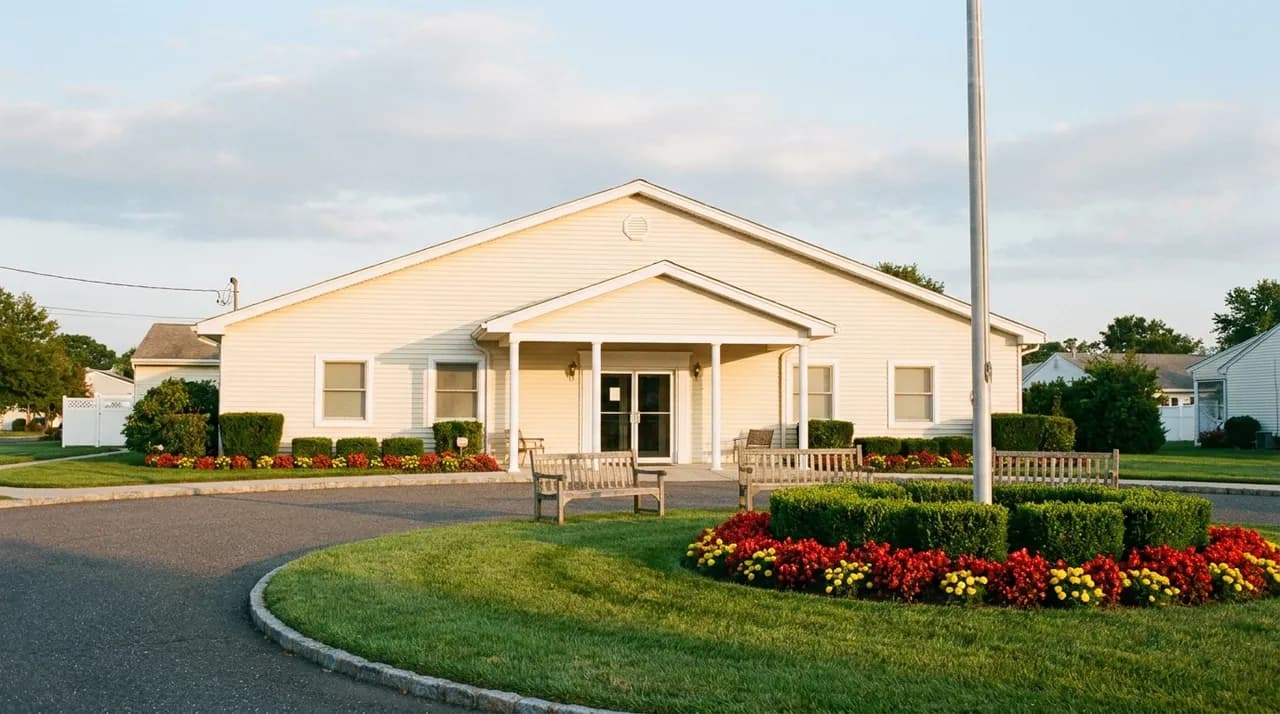
Ocean County is where a lot of that scale lives. Large communities operate like small municipalities: professional management, a written rulebook, a formal tenancy application, and a consistent process they apply to every buyer because they have to. That is generally good news for a seller. The process is knowable, the timeline is predictable, and the approval standard is written down where you can read it before you find a buyer.
Smaller, owner-operated communities can move faster or much slower depending entirely on the owner. You will not know which until you ask.
What this means practically
If your home is in Ocean County, your first question is which market you are in: age-restricted or open, inland or shore-adjacent. Those two answers determine your buyer pool almost completely, and they matter more than anything about the home itself.
If your home is in Monmouth County, your advantage is usually location. A buyer priced out of site-built housing in your municipality is your most likely purchaser, and the listing should be written for that person, not for a generic "affordable housing" buyer.
In both counties, the community has to approve your buyer as a tenant if the home is staying put. That approval is separate from your sale contract, and it is the step that most often adds weeks to a park-sited sale.
We work across both counties and across all eleven of the New Jersey counties where this housing is concentrated. Sometimes the right answer is a straight cash offer because condition or timing rules out a retail sale. Sometimes it is to list the home and let the market pay more than an offer would. And if you are on the other side of it, we also help buyers find a home in these communities. Tell us the address and the community name and we will tell you which of the three fits.
This article is general information about New Jersey housing markets and disclosure requirements. It is not legal advice. Community counts reflect the Philadelphia Fed's 2024 data set. Census figures are rounded. For advice on a specific property, consult a New Jersey attorney or a qualified professional.
Sources: Federal Reserve Bank of Philadelphia, Manufactured Housing Communities in New Jersey: The Basics (June 2024); U.S. Census Bureau QuickFacts, Ocean County, New Jersey; U.S. Census Bureau QuickFacts, Monmouth County, New Jersey; New Jersey DEP Flood Disclosure Law; FEMA Flood Map Service Center