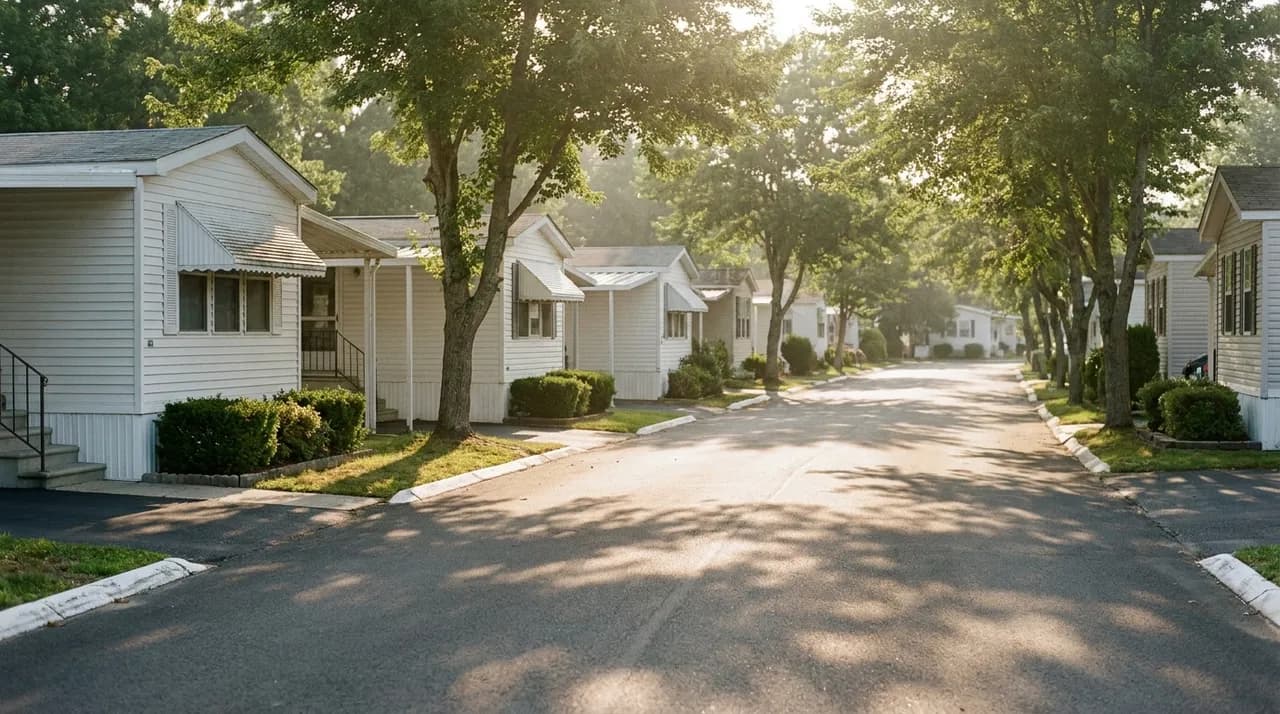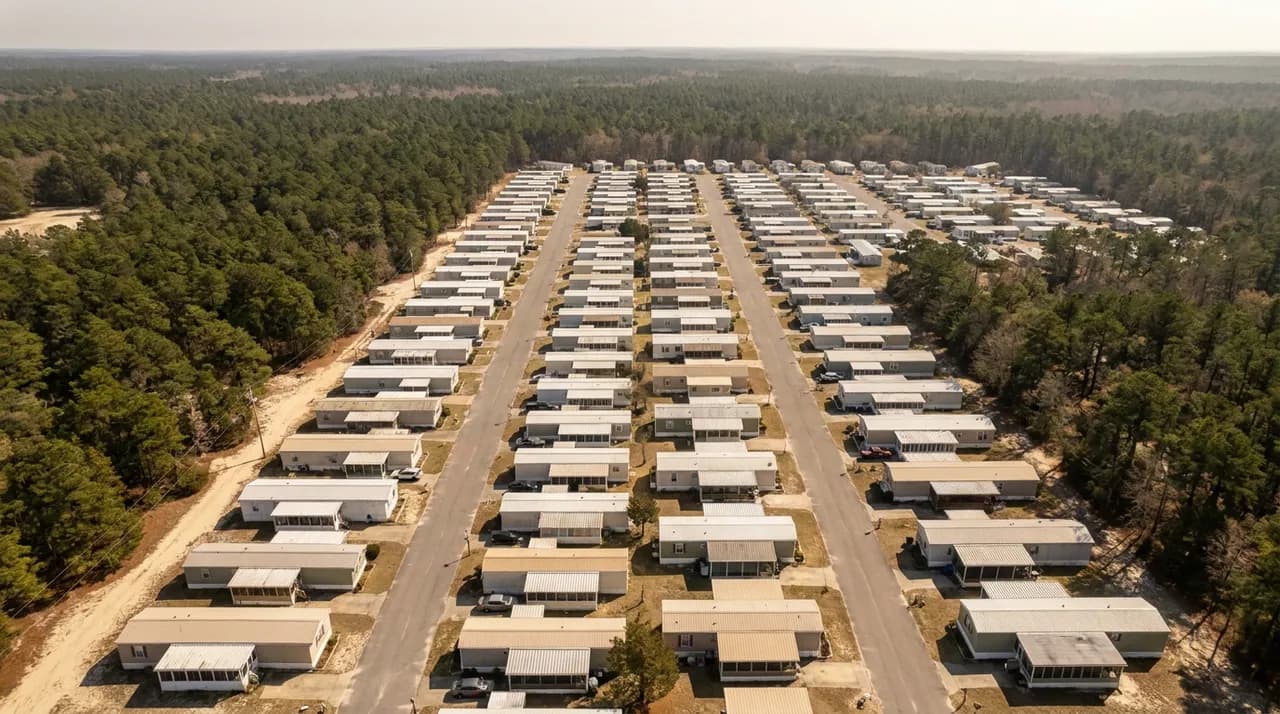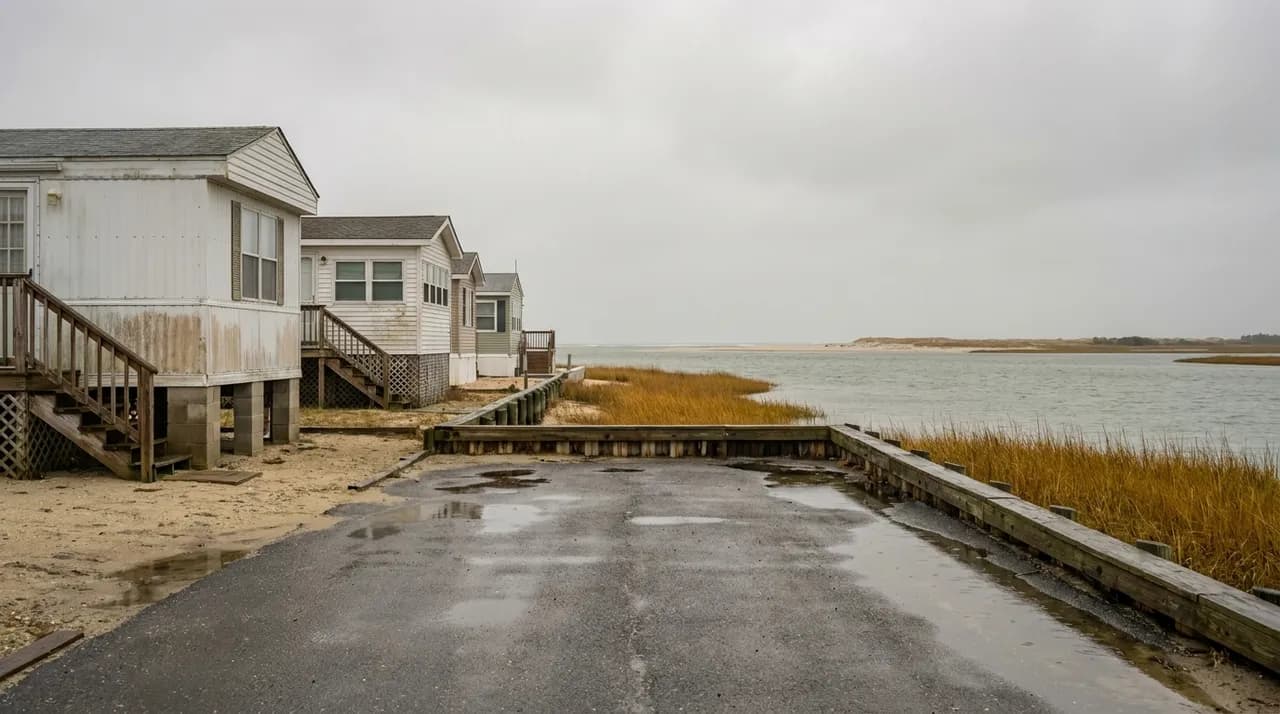
New Jersey's manufactured housing is concentrated exactly where the water is. Of the 268 communities the Federal Reserve Bank of Philadelphia inventoried in its 2024 New Jersey study, the four counties with the most are all coastal: Atlantic with 38, Ocean with 38, Monmouth with 31, and Cape May with 28.
That is 135 of 268 communities, half the state's inventory, on the shore. So flood is not a niche topic here. It is the market.
If your home has taken water and you have made a claim, here is what actually happens to its value, in the order it happens.
First: value after a flood claim is not a percentage
There is no discount table. Anyone who quotes you a number without seeing the home, the flood zone and the repair documentation is guessing.
Four specific mechanisms drive the outcome. Work through them in order and you will know roughly where you stand.
Mechanism one: whether anyone made a substantial damage determination
This is the big one, and most homeowners have never heard of it.
FEMA defines substantial damage as damage of any origin for which the cost of restoring the structure to its before-damaged condition would equal or exceed 50 percent of the market value of the structure before the damage occurred. The parallel term, substantial improvement, covers any reconstruction, rehabilitation, addition or other improvement costing 50 percent or more of the structure's pre-work market value.
Two things to understand precisely.
It is the value of the structure only. Not the land, not the deck, not the shed, not the value of the lease. For a manufactured home, the base against which 50 percent is measured is often modest, which means the threshold is easier to cross than owners expect.
Crossing it triggers compliance with current floodplain standards. These requirements apply to all individual buildings in a Special Flood Hazard Area, expressly including manufactured homes, and to buildings constructed both before and after a community adopted floodplain management regulations. The determination is made and enforced at the local level, by the municipality's floodplain administrator, under the community's own ordinance. Some New Jersey municipalities adopt a stricter threshold than the federal 50 percent minimum.
Practically: if your home was determined substantially damaged, the repair may have to bring the home into compliance with current elevation and anchoring standards, and for a manufactured home those costs can approach or exceed the home's value. A buyer's attorney will ask whether a determination was made. Find out the answer from the floodplain administrator before you market the home, not after.
Mechanism two: the zone the home actually sits in
Flood risk in New Jersey is a parcel-level fact. Two homes in the same community can sit in different zones.
The vocabulary, used correctly:
- A Special Flood Hazard Area is the area with a one percent annual chance of flooding. On a Flood Insurance Rate Map these are the zones beginning with A (A, AE, AH, AO and numbered A zones) and with V (V, VE and numbered V zones).
- V and VE zones are coastal high hazard areas, where wave action is expected. Requirements there are the most demanding, generally involving elevation on piles or columns with the bottom of the lowest horizontal structural member at or above the Base Flood Elevation.
- AE zones have a published Base Flood Elevation, and new construction and substantial improvements must have the lowest floor elevated to or above it.
- Zones outside the Special Flood Hazard Area are moderate or minimal risk, commonly shown as X.
Look up the actual address at the FEMA Flood Map Service Center and cross-check with New Jersey DEP's flood risk notification tool. Do not rely on what the neighbors say.
One number worth keeping in perspective: FEMA reports that from 2014 to 2024, almost one third of NFIP flood insurance claims came from properties in low- to moderate-risk flood zones. Being outside the Special Flood Hazard Area is not the same as being safe, and a buyer who has read anything will know that.
Mechanism three: what insurance will cost the next owner
A buyer is not buying your flood history. They are buying their own future premium, and that is what they price.
FEMA's manufactured homes and NFIP coverage fact sheet sets out the specifics for this housing type:
- The NFIP covers manufactured homes and travel trailers without wheels as defined by the Standard Flood Insurance Policy. The structure must be moveable in one or more sections, built on a permanent frame, and attached to a permanent foundation. Recreational vehicles are not covered, because they do not meet the policy's definition of a building.
- Anchoring is an eligibility requirement. The home must be anchored to a permanent foundation using over-the-top or frame ties to ground anchors, meeting either the manufacturer's standards or the community's floodplain management requirements.
- A manufactured or mobile homeowner is eligible to purchase up to $250,000 of building coverage and up to $100,000 of contents coverage.
- The home's First Flood Height, meaning the first lowest floor above the adjacent ground level, is a factor in the premium. Providing FEMA with an Elevation Certificate may lower it, and one may already exist for the property.
- The NFIP covers losses directly caused by flooding. Wind damage is a different policy. Sellers routinely conflate the two and it confuses buyers.
If an Elevation Certificate exists for your home, find it. If the anchoring was upgraded during the repair, get the documentation. Both are things a buyer can hand to an insurance agent to get a real quote, and a real quote removes the buyer's worst-case assumption. Removing a buyer's worst-case assumption is most of what selling a flood-affected home consists of.
Mechanism four: you have to disclose, and that is now law
New Jersey's Flood Risk Notification Law, P.L. 2023, c.93, was signed on 3 July 2023 and its disclosure requirements took effect on 20 March 2024.
Since that date, a seller of real property must disclose, through the property condition disclosure statement and before the purchaser becomes obligated under a purchase contract, whether the property is located in a FEMA Special Flood Hazard Area or Moderate Risk Flood Hazard Area, together with actual knowledge concerning flood risks of the property. Landlords have a parallel obligation to prospective tenants, and residential leases must include a separate notice advising that flood insurance may be available through the NFIP. Tenants have remedies, including lease termination and damages, where a landlord fails to comply.
NJDEP publishes a flood risk notification tool specifically to help property owners comply.
The practical upshot: your buyer is going to be told. The only question is whether they hear it from you, in context, with the repair documentation in hand, or from a disclosure form at the last minute with no explanation attached. The first version sells. The second one falls apart.
What to gather before you do anything else
Six documents. This is the whole job.
- The flood zone determination for the exact address, from the FEMA Map Service Center.
- Any substantial damage determination, or written confirmation from the municipal floodplain administrator that none was made.
- Permits and final inspections for the repair work. Unpermitted flood repair is the thing that most often kills these deals.
- The claim history, including what was paid and for what.
- The Elevation Certificate, if one exists.
- Anchoring and foundation documentation, especially if it was upgraded.
With those six in a folder, you can have an honest conversation with any buyer. Without them, every buyer assumes the worst, and the worst is usually worse than the truth.
Where we fit
We buy, we list, and we work with buyers, across Cape May, Atlantic, Ocean and the other eight New Jersey counties where this housing sits.
A flood-affected home is one of the few cases where the choice between routes is genuinely close. If the repair was permitted, the documentation is clean and no substantial damage determination was made, listing the home will often do better than an offer, because the documentation removes the buyer's fear and lets the market price it normally. If the repair was not permitted, or the home was determined substantially damaged, or the documentation is simply gone, a cash offer is usually the cleaner outcome because we take on the problem rather than asking you to solve it first.
Send us the address and whatever paperwork you have. We will tell you which one it is. More about how we work.
This article is general information about federal flood insurance concepts and New Jersey disclosure requirements. It is not legal, insurance or engineering advice. Floodplain determinations are made by your municipality under its own ordinance, flood maps and insurance rules change, and the statutes and programs cited contain provisions not summarized here. Consult your municipal floodplain administrator, a licensed insurance professional and a New Jersey attorney about your property.
Sources: FEMA, substantial damage and substantial improvement; FEMA, Manufactured Homes and NFIP Coverage fact sheet (August 2025); FEMA Flood Map Service Center; New Jersey DEP, Flood Disclosure Law; P.L. 2023, c.93, New Jersey Flood Risk Notification Law; Federal Reserve Bank of Philadelphia, Manufactured Housing Communities in New Jersey: The Basics (June 2024)